Elevate Tarot: Beyond Belief, deck and companion book, the second in the Awakening Trilogy.
Coming fall of 2026.
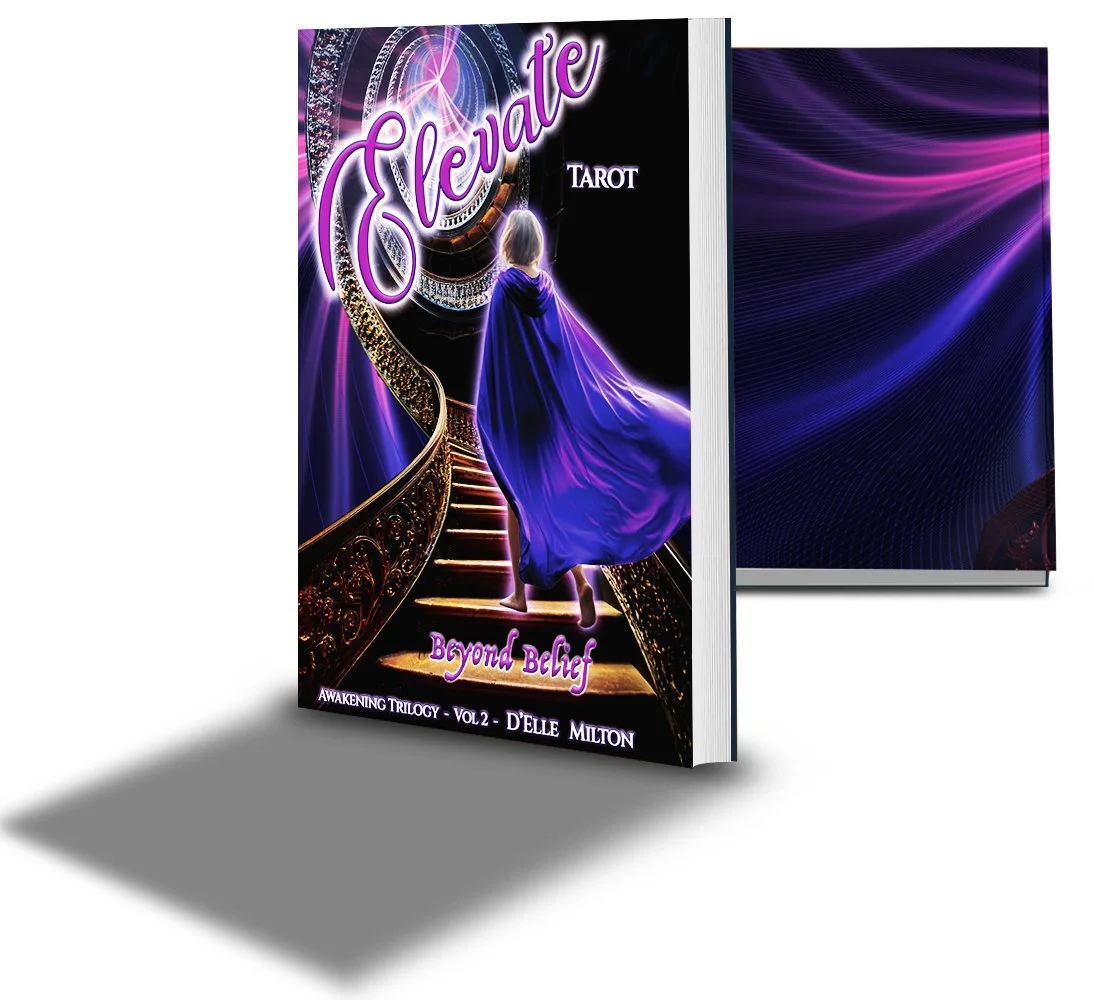
ELEVATE: Beyond Belief
A Series Overview
Have you ever felt that tarot was asking you to choose — to decide which energy is right and which is wrong, which card is good news and which is a warning? What if the most profound insight was never in the individual card, but in the relationship between them?
Elevate: Beyond Belief the second volume of the Awakening Tarot Trilogy — and it is unlike any tarot deck you have encountered.
Rather than 22 separate Major Arcana cards asking to be memorized, Elevate presents 11 Yin/Yang pairs. Each pair places two archetypal forces in deliberate relationship with each other — not in opposition, but in conversation. The Alchemist and the Wise Woman. The Scientist and the Idealist. Enlightenment and Rebirth. And from that conversation, a third quality emerges that neither card could offer alone. That quality, arrived at through all eleven reconciliations, is Discernment — the capacity to see the whole picture and the specific moment simultaneously, without collapsing one into the other. Not judgment. Not blind trust. Clear, unobstructed seeing.
As the author and creator of the Awakening Tarot Trilogy, I can honestly say that building this system changed the way I understand consciousness. The three decks — EVOLVE, Elevate, and enLIGHTen — are not simply card sets. They are a progressive journey: from the willingness to grow, through the release of inherited belief, to the full presence of Here & Now. Each deck deepens what the previous one opened. Together they form the most comprehensive framework for personal awakening I know of — and I created them.
For those who want to go further, the complete Awakening Tarot Trilogy is the foundation of a three-month certification training — one weekend per month — that takes students through all three decks in progression. Graduates receive certification in the Awakening Tarot system and walk away with not just a reading practice but a philosophy of consciousness they can apply to every dimension of their lives.
Elevate: Beyond Belief is currently in production. Reserve your copy today and be among the first to work with a deck that doesn't ask you to choose sides — it asks you to see the whole.
SIGN UP for notifications about the release.
Prologue to Elevate
Beyond Belief
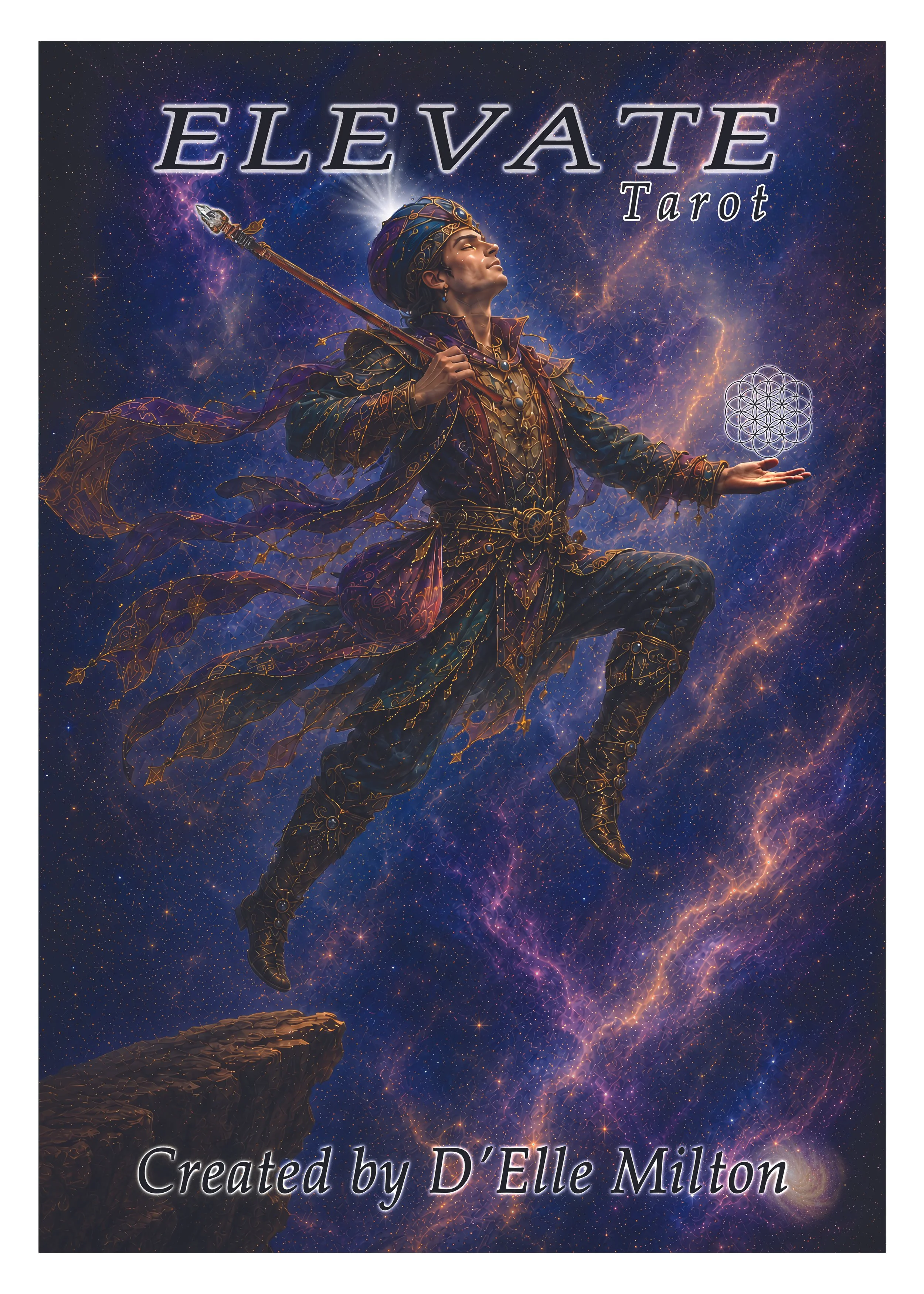
Elevate: Beyond Belief is the second and culminating deck of the Awakening Tarot Trilogy, and it arrives with a question that the first two decks have been quietly preparing the reader to ask: what becomes possible when we stop choosing between opposites and recognize that both were always part of the same thing? Its 78 cards follow the traditional structure — 22 Major Arcana and 56 cards across four suits — but the architecture of the Major Arcana is entirely reimagined. There is no Fool here, no figure stepping naively off a cliff into the unknown. This deck begins in wisdom. It assumes the reader has traveled.
The 22 Major Arcana are structured as 11 pairs, each pairing placing two forces in deliberate relationship with one another — not in conflict, but in conversation. The Magician and the High Priestess open the sequence as the Yin and Yang of Teachers and Guides, the masculine and feminine principles of wisdom in dynamic balance. The Empress and the Emperor illuminate two fundamentally different modes of manifestation. The Emperor represents the mode that has dominated the past two thousand years: make a plan, set priorities, check the boxes, control the process, fix the gaze on the goal. It is effective, and it has built civilizations. But the Empress works differently. She holds her intention with absolute clarity — specific, vivid, felt — and then she releases it. She lets go of the how entirely and opens to receive from the Universe without agenda, without judgment, without the need to manage the outcome. Her power lies not in control but in trust, not in force but in alignment. Her focus is the why — purpose, service, the creative expression of passion in forms that benefit all. This pairing is not a debate about which mode is superior. It is an invitation to recognize that wholeness requires both, and that the world is in the early stages of remembering the one it forgot.
The pairings continue through the full range of human experience. The Hierophant and the Lovers address Relationship — with the Divine and with one another — as two expressions of the same fundamental need for connection. The Chariot and Strength pair the realization of authority with the weight of responsibility it inevitably carries. The Hermit and the Wheel of Fortune set the power of inner knowing against the churn of outer circumstance, asking which force the reader has been trusting to navigate their life. Justice and the Hanged Man place the structures of human-made reality alongside the deeper logic of divine order and ask the reader to examine the difference between perception and expression — between the story we have been told and the truth we can directly access. Death and Temperance are paired as Beyond Density and the Self-Imposed Limitation that requires fire to dissolve — the crucible of experience burning away what no longer serves so that what is essential can emerge. The Devil and the Tower name Distraction and Destruction not as enemies but as redirections: disruptive forces that, understood clearly, point the way back to intention. The Star and the Moon offer two ways of learning — the light path of inspiration and listening to Source, and the dark night of the soul that teaches just as surely, if less gently. It takes what it takes. The Sun and Judgment arrive as Breakthrough and Rebirth — the shedding of judgment itself as a prison, and the resurrection into reinvention that becomes possible when Divine Presence is met directly and without intermediary.
At the culmination of the Major Arcana, the pairs resolve into their final and most luminous expression: Union and the Adept. Union is the recognition that the duality which has structured the entire journey was never a war between opposites — it was a teaching tool, intrinsic to the nature of three-dimensional experience, necessary precisely because of what it demands of us. And the Adept, who stood at the beginning as the 0 Spiritual Warrior and stands here now as the 00 Adept, is the consciousness that has traveled through every pairing, received what each had to offer, and arrived at the Unified Field — not as a concept, but as a lived reality.
The companion book to Elevate is a treatise — a sustained philosophical inquiry into why duality exists at all within the framework of three-dimensional experience, and what it means, practically and spiritually, to transcend it. It does not offer quick techniques or simple exercises. It thinks carefully, and it asks the reader to think carefully alongside it. The central argument is that duality is not a flaw in the design of this dimension but a feature: the very mechanism by which consciousness comes to know itself through contrast, choice, and consequence. But the treatise does not stop there. It goes on to explore what becomes available to a human being who has fully embraced that duality — who has sat with every pair, integrated every tension — and is therefore no longer governed by it. A life co-created with Source Consciousness, oriented by purpose, and no longer fragmented by the need to choose one half of reality over the other.
Welcome to the realm of Elevate – Beyond Belief