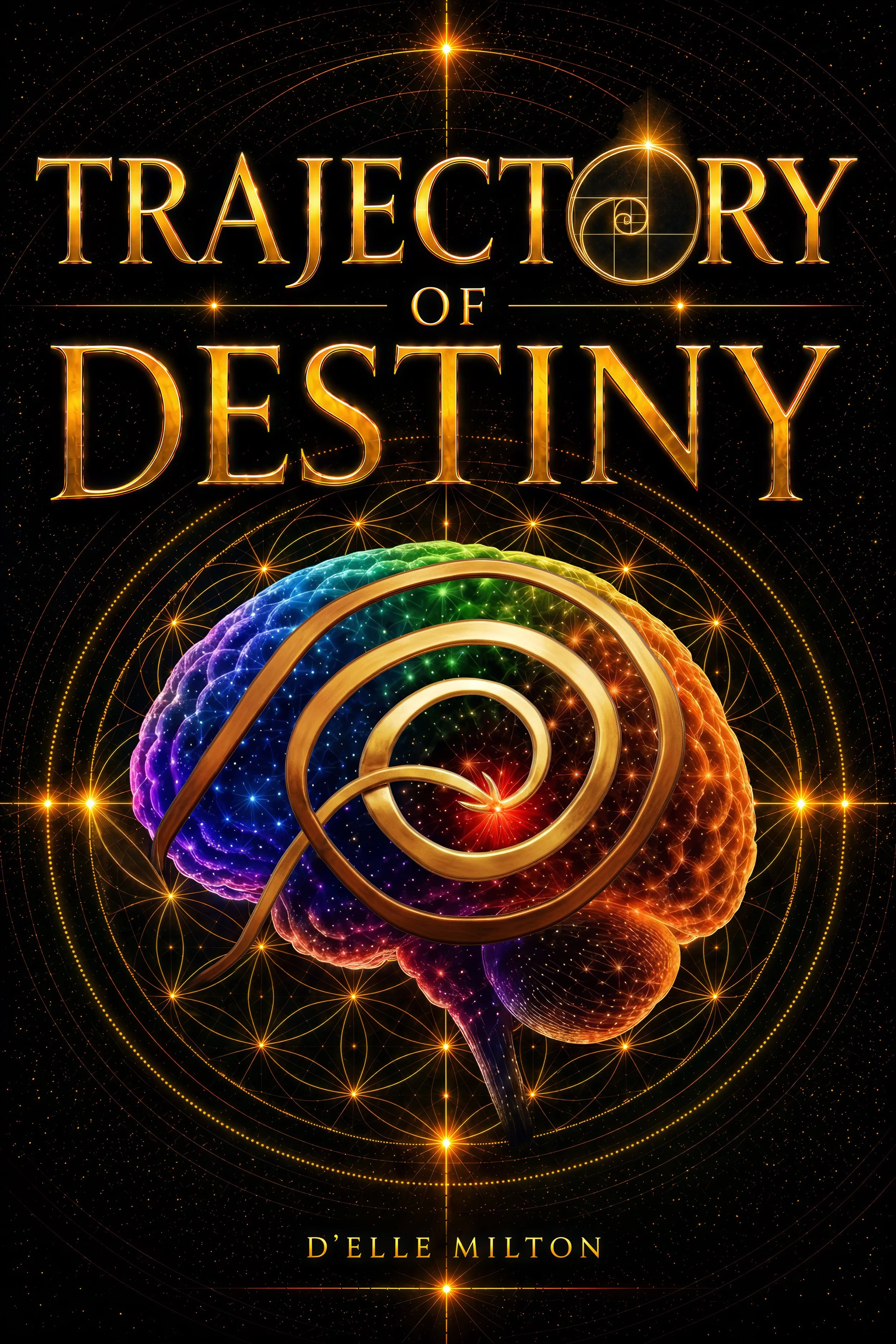
Trajectory of Destiny, a novel set in Interdimensional Dreamtime
coming this summer...
Sign up to be notified of release
or pre-order now!
Trajectory of Destiny Synopsis
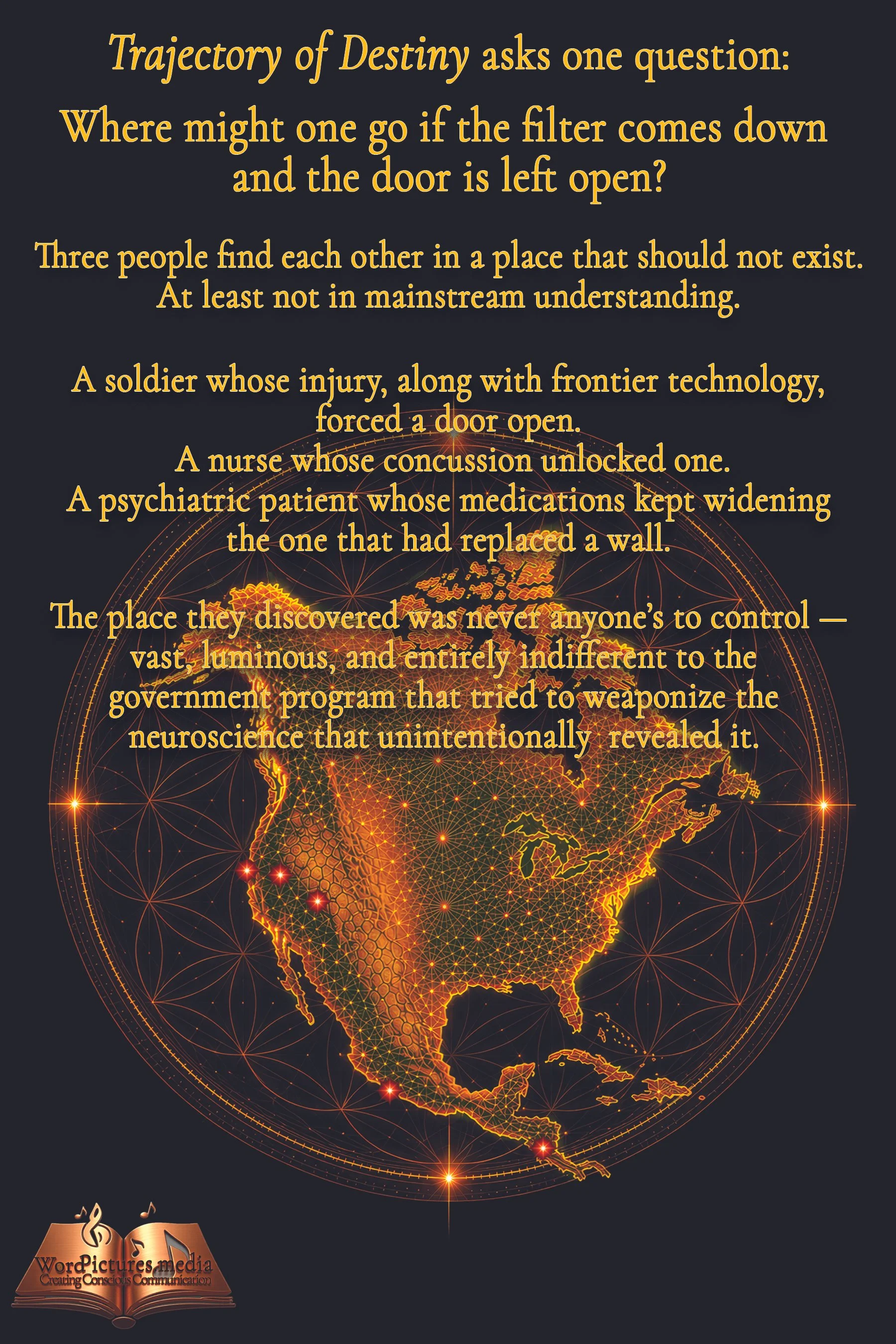
When VA nurse Claire Emmerson returns from compassionate leave, she is assigned to Grant Powell — a Special Forces lieutenant twenty-three days from coming home when a drone strike ended everything he had been building toward. Grant barely speaks, but Claire recognizes immediately that he is not absent. He has decided not to be present. That distinction will cost her everything and give her everything in return.
Then the evidence stops making medical sense. Abrasions appear on Grant's hands as if he has been climbing. Bruising blooms on legs that should not be moving. At the same time, Claire's own post-concussion dream states begin carrying her into vivid shared landscapes where she encounters a man who looks impossibly familiar — healthy, mobile, and increasingly certain that someone is using him for something far beyond rehabilitation.
Grant has been recruited into a covert neural interface program that promises to restore what his injury took. Instead, the program is weaponizing altered consciousness in wounded soldiers, driving them past safe neurological limits to map the architecture of immersive control. As Claire follows the physical evidence, a psychiatric patient connected to Grant's injury begins sending warnings through a notebook no one is supposed to read, and a technician inside the program starts keeping records outside the system.
To protect Grant, Claire must prove the impossible before the program silences her. But the closer she gets to the truth, the clearer it becomes that whatever connects her to Grant may be changing him in ways the program never intended — and that the field they have found together exists beyond any system built to contain it.
Trajectory of Destiny is an 80,000-word upmarket speculative novel — part metaphysical adventure, part love story, entirely its own thing.
TRAJECTORY OF DESTINY, A Novel
He takes the recon duty to spare a breaking man.
The drone strike takes everything else.
Lieutenant Grant Powell is returning from Mosul in silence — paralyzed, brain-damaged, and sealed inside a stillness that no neurologist can fully assess or comprehend. What the military hospital records as absence, nurse Claire Emmerson begins to read as presence. Something is happening in Room 7 that the monitors are not designed to detect.
What the monitors cannot see: a classified and secret implant, placed by a government program no one in the hospital knows exists, transmitting - and receiving. In the disrupted neural landscape of Grant’s traumatic brain injury, it is doing something its wasn’t designed to do. His paralysis is not impeding his virtual reality as he climbs volcanoes and dives from the cliffs at Acapulco.
Claire is not in a position to see any of this clearly. She has returned to the ward from six weeks of compassionate leave, still carrying the invisible weight of a concussion she sustained in the accident that killed her husband — a collision she walked away from believing herself intact. The dreamtime she is beginning to enter suggests otherwise.
Corporal Whitfield, hospitalized under the disintegrating weight of guilt — Grant took his shift, Grant absorbed the blast — is on an anti-psychotic protocol. It is not working as prescribed. It is working as something far stranger: dissolving the filters between what he has always perceived and what he has always been told is not there.
Three people. Three different doors into the same impossible field.
And then Claire misreads the evidence.
The abraded fingertips she finds on Grant’s hands — the raw skin left by real granite, gripped by a consciousness that traveled to a mountain while his body lay still — she reads as a pain response. She increases his medication. The agency’s instruments register the neural suppression as implant failure. They increase the signal. The cascade that follows is part thriller, part revelation, and entirely without precedent.
On the side of a volcano above the Costa Rican canopy, on the Acapulco cliffs where the surf crashes into the rocks below — Grant and Claire are moving toward each other through a space that exists at the frontier of what neuroscience is only now learning to map. Whitfield is there too, stepping from an aircraft doorway with Grant beside him, both of them falling, finally, briefly, free.
Love, when it arrives in Trajectory of Destiny, is the biggest surprise of all.
Coming soon.
GABAergic Dampening & Altered States of Consciousness
An Annotated Bibliography — Epilepsy · Concussion & TBI · Drug Interactions · Psychotropic Substances
The following annotated bibliography compiles peer-reviewed articles, foundational reviews, and clinical studies bearing on the role of GABAergic inhibition as a neurological filter for conscious experience. Entries are organized thematically across four domains: (I) epilepsy and seizure physiology, (II) concussion and traumatic brain injury, (III) drug-induced GABAergic modulation including benzodiazepines and anesthetics, and (IV) psychotropic substances and altered states of consciousness. A fifth section addresses shared phenomenological features across these conditions, including experiential commonalities with near-death-like states. All sources are drawn from peer-reviewed journals, PubMed-indexed publications, and established academic presses.
I. EPILEPSY & GABAergic SEIZURE PHYSIOLOGY
1. Treiman, D. M. (2001). GABAergic mechanisms in epilepsy. Epilepsia, 42 (Suppl. 3), 8–12. https://doi.org/10.1046/j.1528-1157.2001.042suppl.3008.x // PubMed: 11520315 | https://pubmed.ncbi.nlm.nih.gov/11520315/
A landmark synthesis establishing that GABA-mediated inhibition is the principal counterbalance to neuronal excitation in the cerebral cortex. Documents how reductions in GABAergic transmission — including decreased GABA in cerebrospinal fluid and cortical tissue, loss of GABA-A receptor binding, and interneuron loss — are consistently found in human epileptic brain tissue. Establishes the foundational pharmacological principle that GABA agonists suppress seizures while GABA antagonists produce them.
2. Snodgrass, S. R. (1992). GABA and epilepsy: Their complex relationship and the evolution of our understanding. Journal of Child Neurology, 7(1), 77–86. https://doi.org/10.1177/088307389200700114 // https://journals.sagepub.com/doi/10.1177/088307389200700114
An early critical review challenging the simple GABA-deficiency theory of epilepsy. Documents cases where GABA agonists paradoxically intensify seizures — particularly absence and generalized seizures — and explores the role of inhibitory interneuron circuits in paradoxical excitation. Essential background for understanding the complexity of GABAergic modulation in different seizure types.
3. Bryson, A., et al. (2023). GABA-A receptor neurotransmission and epilepsy: Principles, disease mechanisms and pharmacotherapy. Journal of Neurochemistry, 165(1), 6–28. https://doi.org/10.1111/jnc.15769 // https://onlinelibrary.wiley.com/doi/abs/10.1111/jnc.15769
A comprehensive 2023 review from the Florey Institute (University of Melbourne) surveying the multifaceted influence of GABA-A receptor subtypes in epilepsy pathophysiology. Covers receptor subunit composition changes in epileptic tissue, pharmacotherapy mechanisms, and advances in understanding the distinction between phasic and tonic inhibition. Currently one of the most complete references on the topic.
4. Sills, G. J., & Rogawski, M. A. (2023). New GABA-targeting therapies for the treatment of seizures and epilepsy: Role of GABA as a modulator of seizure activity and recently approved medications acting on the GABA system. CNS Drugs, 37, 755–783. https://doi.org/10.1007/s40263-023-01027-2 // PMC: 10501955 | https://pmc.ncbi.nlm.nih.gov/articles/PMC10501955/
A detailed pharmacological review of how GABA-A receptor chloride channel modulation controls seizure initiation and propagation. Documents the paradoxical depolarizing role of GABA in the immature brain and under pathological conditions. Covers recently approved medications (cenobamate, ganaxolone) and the clinical implications of benzodiazepine resistance in status epilepticus due to receptor internalization.
5. Figueiredo, T. H., et al. (2024). Alterations in GABA-A receptor-mediated inhibition triggered by status epilepticus and their role in epileptogenesis and increased anxiety. Neuropharmacology, 258, 110086. https://doi.org/10.1016/j.neuropharm.2024.110086 // https://www.sciencedirect.com/science/article/pii/S096999612400233X
A 2024 ScienceDirect article documenting how prolonged seizure activity (status epilepticus) produces interneuron loss, receptor subunit remodeling, and progressive failure of GABAergic inhibition. Explores how glutamatergic drive increases as inhibition is undermined, and why enhanced GABA does not always dampen excitability — particularly in absence seizures where GABA can paradoxically be depolarizing.
6. Haas, K. Z., et al. (2025). Molecular basis of GABA aminotransferase inhibition in epilepsy: Structure, mechanisms, and drug development. Current Issues in Molecular Biology, 47(12), 1032. https://doi.org/10.3390/cimb47120 // https://www.mdpi.com/1467-3045/47/12/1032
Documents the selective loss of parvalbumin- and somatostatin-positive GABAergic interneurons in temporal lobe epilepsy, focal cortical dysplasia, and drug-resistant epilepsies. Details receptor subunit downregulation contributing to benzodiazepine resistance and reduced seizure threshold. Covers emerging therapeutic strategies including interneuron transplantation and chloride transporter modulation.
II. CONCUSSION & TRAUMATIC BRAIN INJURY (TBI)
7. Cantu, D., et al. (2015). Glutamate and GABA imbalance following traumatic brain injury. Current Neurology and Neuroscience Reports, 15(6), 27. https://doi.org/10.1007/s11910-015-0545-1 // PMC: 4640931 | https://pmc.ncbi.nlm.nih.gov/articles/PMC4640931/
A comprehensive review of acute, subacute, and chronic neurochemical changes following TBI. Establishes that loss of parvalbumin-positive fast-spiking GABAergic interneurons — roughly 40% of the cortical GABAergic population — reduces inhibitory tone and creates vulnerability to post-traumatic seizures. Documents GABA-B receptor changes, excitotoxic glutamate surge, and the mechanisms of impaired learning following repeated concussions.
8. Boychuk, J. A., et al. (2021). Traumatic brain injury broadly affects GABAergic signaling in dentate gyrus granule cells. eNeuro, 8(3), ENEURO.0055-20.2021. https://doi.org/10.1523/ENEURO.0055-20.2021 // PMC: 8116114 | https://pmc.ncbi.nlm.nih.gov/articles/PMC8116114/
Using a controlled cortical impact (CCI) model of severe TBI, this study documents early and persistent deficits in both synaptic and extrasynaptic GABA-A receptors, as well as a 55% reduction in GABA-B receptor function persisting two months post-injury. Demonstrates that GABAergic disruption in hippocampal networks predicts both epileptogenesis and cognitive dysfunction as sequelae of TBI.
9. Kang, Y., et al. (2022). Longitudinal alterations in GABA-A receptor availability over ~1 year following traumatic brain injury. Brain Communications, 4(4), fcac159. https://doi.org/10.1093/braincomms/fcac159 // https://academic.oup.com/braincomms/article/4/4/fcac159/6608714
A longitudinal PET imaging study tracking GABA-A receptor availability in the anterior forebrain mesocircuit following TBI. Documents that decreased GABA-A availability correlates with disorders of consciousness and cognitive impairment, and that partial recovery of receptor function parallels clinical improvement. Provides in vivo human evidence for the thalamocortical GABAergic disruption model.
10. Carron, S. F., et al. (2023). Hippocampal interneuronal dysfunction and hyperexcitability in a porcine model of concussion. Communications Biology, 6, 1139. https://doi.org/10.1038/s42003-023-05491-w // https://www.nature.com/articles/s42003-023-05491-w
In vivo electrophysiology in minipigs reveals that concussion preferentially disrupts hippocampal interneuron activity — reducing firing rate, spike width, and amplitude of CA1 interneurons while leaving pyramidal cells initially intact. This selective GABAergic interneuron vulnerability generates network hyperexcitability. Computational modeling implicates altered voltage-gated sodium channel kinetics as the mechanism.
11. Corps, K. N., et al. (2015). Disruption of network synchrony and cognitive dysfunction after traumatic brain injury. Frontiers in Systems Neuroscience, 10, 43. https://doi.org/10.3389/fnsys.2016.00043 // https://www.frontiersin.org/journals/systems-neuroscience/articles/10.3389/fnsys.2016.00043/full
Examines how TBI disrupts GABAergic septohippocampal projections and theta oscillation generation, leading to impaired memory encoding. Proposes a systems-level model connecting microscale sodium channel disruption to macroscale network connectivity failure. Relevant to understanding how post-concussive cognitive symptoms arise from inhibitory circuit breakdown.
12. Pischiutta, F., et al. (2025). Synaptic pathology in traumatic brain injury and therapeutic insights. International Journal of Molecular Sciences, 26(19), 9604. https://doi.org/10.3390/ijms26199604 // https://www.mdpi.com/1422-0067/26/19/9604
A 2025 review covering acute, subacute, and chronic phases of synaptic dysfunction in TBI. Documents that the subacute phase is specifically marked by GABAergic disruption alongside neuroinflammation, while the chronic phase shows persistent E/I imbalance with deficits in GABAergic neurons and chronic NMDA receptor overactivity. Highlights post-traumatic epilepsy, mood disturbances, and cognitive deficits as downstream consequences.
13. Sorg, S. F., et al. (2023). Acute thalamic connectivity precedes chronic post-concussive symptoms in mild traumatic brain injury. Brain, 146(8), 3484–3498. https://doi.org/10.1093/brain/awad126 // https://academic.oup.com/brain/article/146/8/3484/7051141
Demonstrates that acute thalamocortical hyperconnectivity following mTBI is linked to loss of thalamic inhibitory GABAergic interneurons. Downregulation of GABA-A and GABA-B receptor subunit mRNAs in thalamocortical relay neurons is documented, consistent with the loss of the thalamic reticular nucleus filtering mechanism. Provides the strongest human neuroimaging evidence linking concussive GABAergic disruption to chronic post-concussive symptoms.
III. PHARMACOLOGICAL GABAergic MODULATION: BENZODIAZEPINES, ANESTHETICS & DRUG INTERACTIONS
14. Rudolph, U., & Möhler, H. (2006). GABA-based therapeutic approaches: GABA-A receptor subtype functions. Current Opinion in Pharmacology, 6(1), 18–23. https://doi.org/10.1016/j.coph.2005.10.003 // PMC: 3375401 | https://pmc.ncbi.nlm.nih.gov/articles/PMC3375401/.
A foundational review mapping the behavioral effects of benzodiazepines to specific GABA-A receptor subunit subtypes: alpha-1 mediates sedation and amnesia; alpha-2 mediates anxiolysis; alpha-3 is expressed in the thalamic reticular nucleus and implicated in thalamocortical oscillation control. Documents GABA-B receptor pharmacology (baclofen) for muscle spasticity and pain.
15. Gunja, N. (2013). The clinical and forensic toxicology of Z-drugs. Journal of Medical Toxicology, 9(2), 155–162. https://doi.org/10.1007/s13181-013-0291-4
Documents the pharmacology of Z-drugs (zolpidem, zaleplon, zopiclone) as selective GABA-A alpha-1 subunit agonists that produce sedation and sleep by suppressing the thalamocortical arousal system. Includes forensic documentation of complex behaviors (sleepwalking, amnesia, altered consciousness) associated with these agents — illustrating GABA-mediated disruption of conscious awareness without full sedation.
16. Olsen, R. W., & Sieghart, W. (2023). GABA-A receptors: Subtypes provide diversity of function and pharmacology. Neuropharmacology, 56(1), 141–148.
Comprehensive reference on the 19 known GABA-A receptor subunit genes and their diverse pharmacological roles. Covers how different receptor subunit compositions in the cortex, thalamus, hippocampus, and reticular nucleus produce anatomically specific effects on consciousness, anxiety, seizure threshold, and memory.
17. Hemmings, H. C., et al. (2019). Towards better understanding of anesthetic mechanisms of action: A decade of molecular insights. Journal of Neuroscience Research, 97(4), 464–488. https://doi.org/10.1002/jnr.24403 // PMC: 11695389 | https://pmc.ncbi.nlm.nih.gov/articles/PMC11695389/
Reviews the molecular basis of general anesthesia, documenting that seven of ten common anesthetic agents (including propofol, barbiturates, etomidate, and volatile agents) are GABA-A receptor agonists. Demonstrates how anesthetic enhancement of GABAergic transmission interrupts thalamocortical transmission that controls sleep-wake patterns — providing the mechanistic basis for pharmacological loss of consciousness.
18. Christian, C. A., et al. (2013). Endogenous positive allosteric modulation of GABA-A receptors by diazepam binding inhibitor. Neuron, 78(6), 1063–1074. https://doi.org/10.1016/j.neuron.2013.04.034 // Neuron: https://www.cell.com/neuron/fulltext/S0896-6273(13)00357-7
Demonstrates the existence of endogenous 'endozepines' — brain-produced benzodiazepine-mimicking peptides secreted by astrocytes in the thalamic reticular nucleus. These natural modulators regulate GABAergic inhibition in the nRT and suppress absence seizure activity, revealing that the brain has an intrinsic pharmaceutical equivalent of benzodiazepines for thalamic gate control.
19. Tan, K. R., et al. (2011). Neural bases for addictive properties of benzodiazepines. Nature, 463(7282), 769–774. https://doi.org/10.1038/nature08758 // PMC: 4020178 | https://pmc.ncbi.nlm.nih.gov/articles/PMC4020178/
Shows how benzodiazepines, through alpha-1 GABA-A receptors, activate the mesolimbic dopamine reward system — explaining addiction liability. Relevant to the pharmacology of drug-induced altered consciousness and the risks of benzodiazepine dependence in neurological patients, including those with TBI and epilepsy.
20. Greenblatt, D. J., & Shader, R. I. (2023). GABA-A receptor subtypes and benzodiazepine use, misuse, and abuse. Frontiers in Psychiatry, 13, 1060949. https://doi.org/10.3389/fpsyt.2022.1060949 // https://www.frontiersin.org/journals/psychiatry/articles/10.3389/fpsyt.2022.1060949/full
Reviews DSM-5 criteria for benzodiazepine use disorder in the context of subunit-specific pharmacology. Documents that sedation and anterograde amnesia (alpha-1 mediated) are clinically useful in surgical settings but represent serious side effects in anxiety treatment. Relevant to drug interaction profiles in patients with TBI, epilepsy, and co-occurring psychiatric disorders.
IV. PSYCHOTROPIC SUBSTANCES & ALTERED STATES OF CONSCIOUSNESS
21. Nichols, D. E. (2016). Psychedelics. Pharmacological Reviews, 68(2), 264–355. https://doi.org/10.1124/pr.115.011478
The definitive pharmacological review of classical serotonergic psychedelics. Establishes that these substances primarily act through 5-HT2A receptor agonism, which reduces thalamocortical filtering (directly relevant to the RAS-GABA system). Documents modulation of prefrontal cortical GABAergic interneuron activity, altered default-mode network function, and the mechanisms underlying ego dissolution and perceptual alteration.
22. Smausz, R., Neill, J., & Gigg, J. (2022). Neural mechanisms underlying psilocybin's therapeutic potential — the need for preclinical in vivo electrophysiology. Journal of Psychopharmacology, 37(1), 24–40. https://doi.org/10.1177/02698811221092508 // https://journals.sagepub.com/doi/10.1177/02698811221092508
Reviews how psilocybin modulates gamma frequency oscillations generated by GABAergic interneuron networks. Presents evidence that GABAergic inhibitory-inhibitory (I-I) and excitatory-inhibitory (E-I) loops are responsible for gamma rhythm generation, and that psilocybin's effects on consciousness arise partly through altered GABAergic network dynamics in the prefrontal cortex and hippocampus.
23. Schartner, M. M., et al. (2017). Increased spontaneous MEG signal diversity for psychoactive doses of ketamine, LSD and psilocybin. Scientific Reports, 7, 46421. https://doi.org/10.1038/srep46421 // PubMed: 28422113 | https://pubmed.ncbi.nlm.nih.gov/28422113/
A landmark neurophysiology paper showing that psilocybin, LSD, and sub-anesthetic ketamine all increase brain signal complexity (Lempel-Ziv complexity) beyond normal waking levels — the opposite of what occurs under GABAergic anesthesia or during sleep. Provides an empirical complexity measure linking GABA-mediated suppression of neural diversity to reduced consciousness, and its release to expanded states.
24. Vollenweider, F. X., & Preller, K. H. (2020). Psychedelic drugs: Neurobiology and potential for treatment of psychiatric disorders. Nature Reviews Neuroscience, 21(11), 611–624. https://doi.org/10.1038/s41583-020-0367-2
Reviews the neural basis of altered states induced by classical psychedelics, documenting reduced thalamocortical filtering, loosening of top-down predictive signaling, and increased sensitivity to bottom-up sensory input — a direct pharmacological inversion of the RAS-GABA filtering function. Covers the claustro-cortical circuit and default-mode network disruption as mechanisms of altered self-awareness.
25. Carhart-Harris, R. L., et al. (2014). The entropic brain: A theory of conscious states informed by neuroimaging research with psychedelic drugs. Frontiers in Human Neuroscience, 8, 20. https://doi.org/10.3389/fnhum.2014.00020
Proposes the entropic brain hypothesis: that normal consciousness reflects an optimally ordered state maintained by top-down inhibitory control (including GABAergic filtering), and that psychedelics increase neural entropy by disrupting this. Critically, the same framework explains why GABAergic anesthesia, deep sleep, and disorders of consciousness all reduce entropy — unifying these states in a single theoretical framework.
26. Palhano-Fontes, F., et al. (2019). The psychedelic state induced by ayahuasca modulates the activity and connectivity of the default mode network. PLOS ONE, 10(2), e0118143. https://doi.org/10.1371/journal.pone.0118143
Documents that DMT-containing ayahuasca reduces default-mode network (DMN) activity through mechanisms overlapping with serotonin-GABA interactions in the prefrontal cortex. Relevant to understanding how both psychedelics and seizures (which also disrupt DMN integrity) produce overlapping phenomenological features including ego dissolution and time distortion.
27. Vollenweider, F. X., et al. (2023). Psychedelics and disorders of consciousness: The current landscape and the path forward. Neuroscience of Consciousness, 2024(1), niae025. https://doi.org/10.1093/nc/niae025 // https://academic.oup.com/nc/article/2024/1/niae025/7693882
Examines whether psychedelics — given their entropy-enhancing properties — could be therapeutic for disorders of consciousness (coma, vegetative states). Reviews evidence that psilocybin and ketamine increase spontaneous brain complexity without affecting evoked complexity. Directly relevant to the intersection of TBI-related consciousness disorders and psychedelic neuropharmacology.
V. SHARED PHENOMENOLOGY: EPILEPSY, TBI, DRUGS & NEAR-DEATH-LIKE STATES
28. Britton, W. B., & Bootzin, R. R. (2004). Near-death experiences and the temporal lobe. Psychological Science, 15(4), 254–258. https://doi.org/10.1111/j.0956-7976.2004.00661.x // PubMed: 15043643 | https://pubmed.ncbi.nlm.nih.gov/15043643/
Demonstrates that individuals reporting transcendental near-death experiences show significantly more temporal lobe epileptiform EEG activity than controls, nearly entirely left-lateralized. Also, documents altered sleep patterns (reduced REM latency) in near-death experiencers — linking the temporal lobe's role in GABAergic seizure-like discharge with mystical phenomenology. A foundational study in the neuroscience of exceptional experiences.
29. Gloor, P. (1990). Experiential phenomena of temporal lobe epilepsy: Facts and hypotheses. Brain, 113(6), 1673–1694. https://doi.org/10.1093/brain/113.6.1673
Gloor's seminal work documenting that stimulation of temporal lobe structures (hippocampus, amygdala) produces vivid experiential phenomena including memory flashbacks, déjà vu, feelings of unreality, and emotional intensification. Establishes the limbic system's role in generating subjective experiences that overlap with drug-induced altered states and reported near-death experiences.
30. Timmermann, C., et al. (2023). Psychedelic experiences comparable to near-death experiences: A neurochemical model based on similarities of DMT reports. Frontiers in Psychology, 9, 1424. https://doi.org/10.3389/fpsyg.2018.01424
Documents striking phenomenological overlap between DMT-induced states and near-death experiences as reported across populations — including tunnel phenomena, life review, encounters with entities, and ego dissolution. Proposes that endogenous DMT release or related indolamine activity during extreme physiological states (cardiac arrest, severe hypoxia, seizure) may mediate cross-condition experiential similarity.
31. Mobbs, D., & Watt, C. (2011). There is nothing paranormal about near-death experiences: How neuroscience can explain seeing bright lights, meeting the dead, or being convinced you are one of them. Trends in Cognitive Sciences, 15(10), 447–449. https://doi.org/10.1016/j.tics.2011.07.010
Provides a neurological framework for near-death phenomenology, implicating REM intrusion, temporal lobe excitation, hypoxia-induced disinhibition (loss of GABAergic suppression), and endogenous opioid and ketamine-like NMDA antagonism as convergent mechanisms. Documents why these states share features with drug-induced, seizure-induced, and anoxic altered states.
32. Greyson, B., Fountain, N. B., et al. (2014). Out-of-body experiences associated with seizures. Frontiers in Human Neuroscience, 8, 65. https://doi.org/10.3389/fnhum.2014.00065 // https://doi.org/10.3389/fnhum.2014.00065
Examines out-of-body experience (OBE) reports in a seizure population, finding that OBEs occurred in approximately 7% of patients — primarily associated with temporal-parietal junction involvement. Provides clinical evidence for the neural substrate of dissociative body-image experiences in epilepsy, with direct relevance to similar reports from TBI and psychedelic drug contexts.
33. Beauregard, M. (2007). Mind does really matter: Evidence from neuroimaging studies of emotional self-regulation, psychotherapy, and placebo effect. Progress in Neurobiology, 81(4), 218–236. https://doi.org/10.1016/j.pneurobio.2007.01.005
Addresses the common neurobiological substrate shared by mystical experience, drug-altered states, and extreme physiological events — including the role of the default-mode network, limbic-GABAergic interactions, and top-down cortical modulation. Relevant to understanding why phenomenologically similar reports emerge from structurally diverse triggers including seizures, TBI, anesthesia, and psychedelic ingestion.
Compiler's Note: All entries above are drawn from peer-reviewed sources indexed in PubMed, PubMed Central (PMC), Springer Nature, Wiley, Oxford Academic, Frontiers, MDPI, PNAS, Cell Press, Nature Publishing Group, and the American Chemical Society. Where available, open-access PMC accession numbers and DOIs are provided to facilitate retrieval. Readers are encouraged to verify current availability and pagination, as some journal pagination may differ across print and online editions.
Addendum — GABAergic Dampening & Altered States of Consciousness: An Annotated Bibliography