Sassy-Joy & Friends, the first of a series of children’s books, are coming this fall...
Sign up to be notified of release

Sassy-Joy and Friends: The Series for Children to Share
Children learn best when their hearts are open, and their hearts open widest when they feel seen. The Sassy-Joy and Friends series was created from a simple but powerful conviction: that every child sitting in a classroom, on a playground, or at a lunch table deserves to understand not just that their peers are different, but why — and why that difference is worthy of patience, curiosity, and genuine kindness.
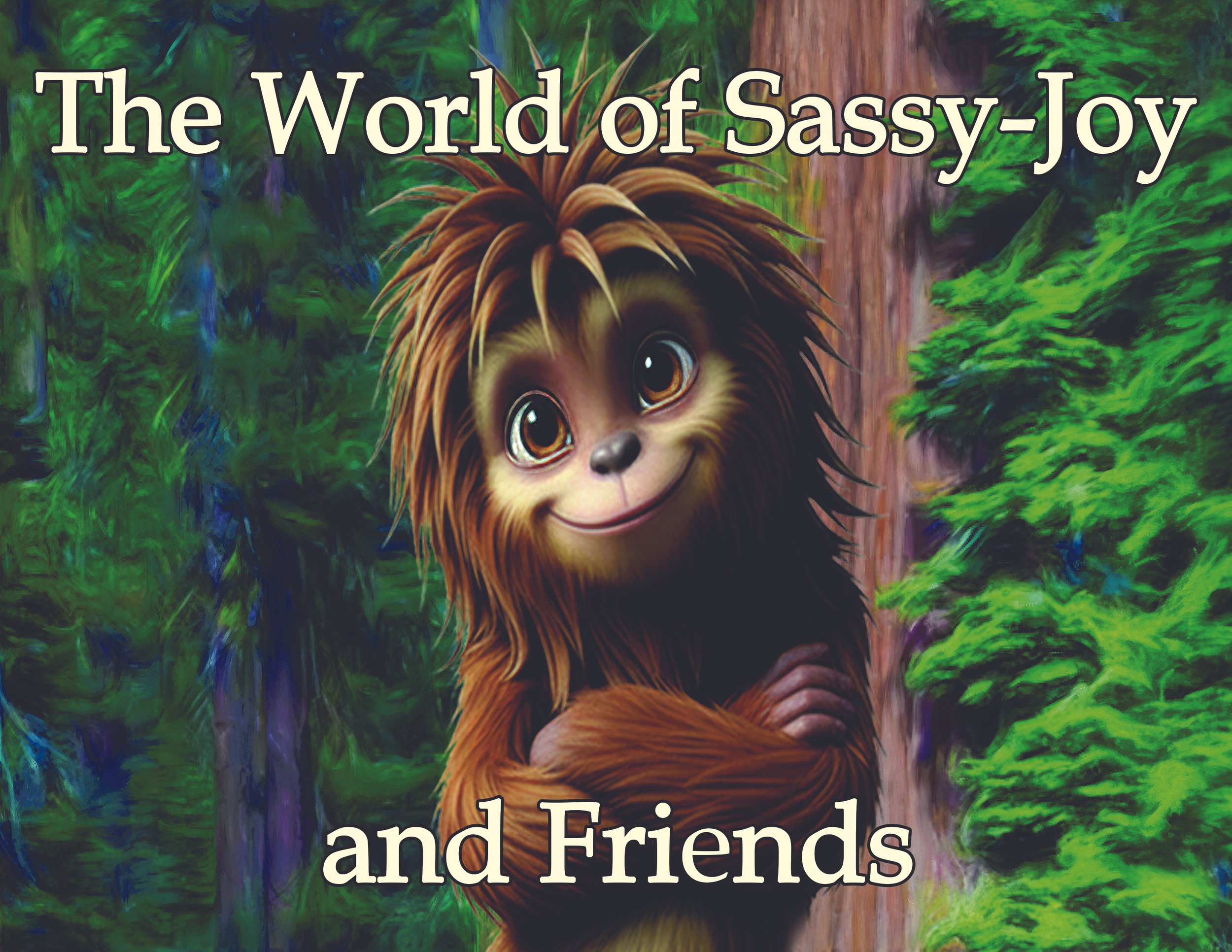
At the center of each story is Sassy-Joy, a young Sasquatch whose warmth is as large as her footprint. She doesn't lecture. She doesn't fix. She simply notices, wonders aloud, and helps the children around her find the words and the compassion that were already inside them, waiting to be found. Through her eyes, readers between the ages of six and nine are invited into worlds that mirror their own — worlds where a hedgehog friend suddenly curls into a tight, silent ball when the noise of a birthday party becomes too much to bear, where a puffer fish classmate can be perfectly funny and clever one moment and then, seemingly without warning, loses all control of himself and tumbles helplessly through the water while dolphins use him as a basketball. These are not cautionary tales. They are portraits — rendered with humor, tenderness, and scrupulous honesty — of what it actually feels like to live inside a nervous system that doesn't always cooperate with the world around it.
The series is designed to work as informal education in the truest sense of that phrase: learning that happens before a child realizes they are learning. Each book in the series addresses a specific experience that children encounter but often lack the vocabulary or framework to process. Some of these experiences are neurological — the hedgehog who shuts down under sensory overload, the squirrel who simply cannot stop moving no matter how much he wants to, the sloth whose body moves through the world at its own unhurried pace and requires accommodations that others don't. These stories give children on the spectrum, children with ADHD, children with mobility challenges, and their peers a shared language and a shared story. Research consistently shows that narrative is among the most effective tools for building empathy in early childhood, and that children who develop empathy early demonstrate stronger social outcomes, better conflict resolution skills, and greater academic engagement throughout their school years.
The format is easy to read and fun to share. Beautifully illustrated, the characters come alive and create the perfect way to open some potentially difficult conversations. Other books in the series address the social and emotional challenges that cut across all neurological profiles, because struggle does not require a diagnosis. A child who bullies is often a child in pain. A child who cheats is often a child who is terrified of failure. A child who lies may be protecting something fragile inside themselves. And a child who cannot afford the school lunch — who stands at the end of that line hoping no one notices — is carrying a weight that no six-year-old should have to carry alone. Sassy-Joy meets each of these situations, not with judgment but with the same open, loving, good-natured humor and grace she brings to everything. She doesn't always have answers. Sometimes she just stays close. And that, for many children reading these books, will be the most important lesson of all.
Parents, educators, school counselors, and librarians will find that each title opens a natural conversation that can be difficult to begin otherwise. The books do not require a clinical setting or a formal lesson plan to be effective. They work at bedtime, in reading circles, in waiting rooms, and in the quiet aftermath of a hard day at school. Each story is complete on its own, but the series as a whole builds a community — Sassy-Joy's community — that grows richer and more nuanced with every new friend who joins it. By the time a child has read several books in the series, they have internalized something more durable than a rule or a moral: they have internalized a way of looking at the people around them.
That is the purpose of Sassy-Joy and her friends. Not to explain the world away, but to make it a little more navigable — for every child who has ever felt too loud, too still, too much, or not quite enough.